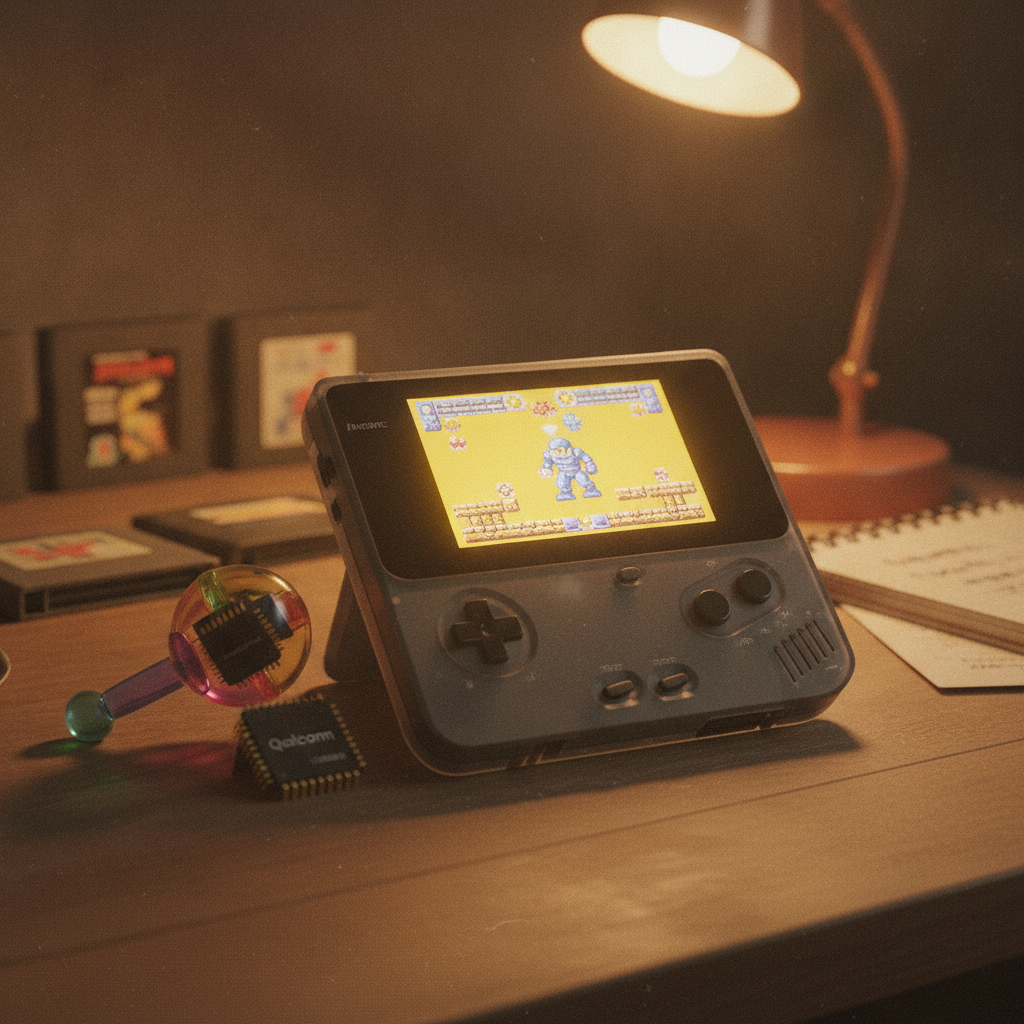
Anbernic has long been a familiar name in the retro handheld space, known for its consistent output of Linux-based devices that prioritize emulation performance and build quality. However, their latest offering, the RG55G1, marks a significant departure. This device represents Anbernic’s ambitious first foray into the world of Snapdragon-powered Android handhelds, a move that immediately piques interest. But, as with any bold new direction, it raises a crucial question: does this new venture deliver on its promise, or does it stumble on its path? Our in-depth review aims to unravel the complexities of the RG55G1, exploring its strengths, weaknesses, and ultimately, its place in the crowded portable gaming market.
The Core Contradiction: A Tale of Two Chips
The headline feature of the RG55G1 is undoubtedly its Snapdragon processor. On paper, a Snapdragon chip typically implies robust performance, especially in CPU-intensive tasks. This holds true for the RG55G1, which boasts a capable CPU that handles many emulation scenarios with aplomb. Systems like the PSP, Nintendo DS, and even some PlayStation 2 and GameCube titles run surprisingly well, often benefiting from the raw processing power available for decoding and running more complex emulation layers. The experience for these mid-tier systems is generally smooth, with stable frame rates and minimal stutters, making it a strong contender for those looking to revisit their favorites from these eras.
However, the narrative takes a sharp turn when we consider the integrated GPU. Despite the strong CPU, the RG55G1 is paired with a GPU that, frankly, struggles to keep pace. This creates a fascinating and, at times, frustrating contradiction. While the CPU can competently manage the heavy lifting of certain emulators, the graphical processing unit often becomes the bottleneck. This becomes glaringly apparent when attempting to push the device into more demanding territory. Higher-end PlayStation 2 or GameCube titles that require significant GPU rendering often suffer from noticeable slowdowns, graphical glitches, or simply become unplayable at enjoyable frame rates. Modern Android games, especially those with graphically intensive 3D environments, also face similar challenges, failing to deliver a fluid experience even on medium settings. It’s a classic case of having a powerful engine with an inadequate transmission – the potential is there, but it can’t always be fully utilized.
Design, Display, and Ergonomics
Anbernic’s reputation for solid build quality generally holds true with the RG55G1. The device feels robust in hand, utilizing durable plastics that resist creaks and flex. The ergonomic design is comfortable for extended play sessions, with well-placed controls that are easily accessible. The buttons offer a satisfying tactile feedback, and the analog sticks provide decent precision, though perhaps not on par with premium console controllers. The D-pad, a crucial component for retro gaming, is responsive and accurate, which is a significant plus for fighting games and platformers.
The display is a 5.5-inch IPS panel, which offers vibrant colors and good viewing angles. Its resolution is perfectly adequate for the target emulation range, ensuring that pixel art and 3D textures alike look crisp without excessive scaling artifacts. While not a groundbreaking display, it’s a perfectly functional and enjoyable screen that serves its purpose well. Brightness levels are sufficient for indoor use, though direct sunlight might pose some visibility challenges.
Software Experience and Battery Life
Running on Android, the RG55G1 offers a familiar and flexible environment. Users have access to the Google Play Store, allowing for easy installation of emulators, front-ends, and native Android games. Anbernic typically provides a relatively clean Android build, and the RG55G1 is no exception, minimizing bloatware and allowing for a fairly customizable user experience. Setting up emulators and games is straightforward for anyone familiar with Android, though newcomers might appreciate some initial guidance.
Battery life is respectable, especially for less demanding emulation. You can expect several hours of playtime from titles like PSP or DS games. Pushing the device with more intensive GameCube or PS2 emulation, or running demanding Android games, will naturally reduce longevity, but it still manages to offer a reasonable duration for most commutes or casual gaming sessions. Charging is via USB-C, which is a welcome modern convenience.
The Verdict: A Niche Contender
The Anbernic RG55G1 is a device with a clear identity crisis. Its potent Snapdragon CPU opens doors to impressive emulation performance for a range of systems, making it a compelling option for those primarily interested in titles up to and including PSP, DS, and less demanding PS2/GameCube experiences. The solid build, comfortable ergonomics, and decent display further enhance its appeal in this bracket.
However, its underpowered GPU acts as a significant limiter, preventing it from truly competing with more graphically capable Android handhelds for higher-end emulation or modern Android gaming. It’s a device that asks you to manage your expectations carefully.
Is it worth it? For those who prioritize CPU-bound emulation and are content with its graphical limitations, the RG55G1 offers a unique proposition at its price point. It’s a commendable first step for Anbernic into the Snapdragon world, showcasing their ability to integrate new hardware. Yet, it also highlights the challenges of balancing components. The RG55G1 is not a powerhouse, but rather a specialized tool – an intriguing and generally well-built handheld for a specific kind of portable retro gaming enthusiast. If you understand its strengths and are willing to work within its limitations, the RG55G1 might just be the conflicted companion you’re looking for.