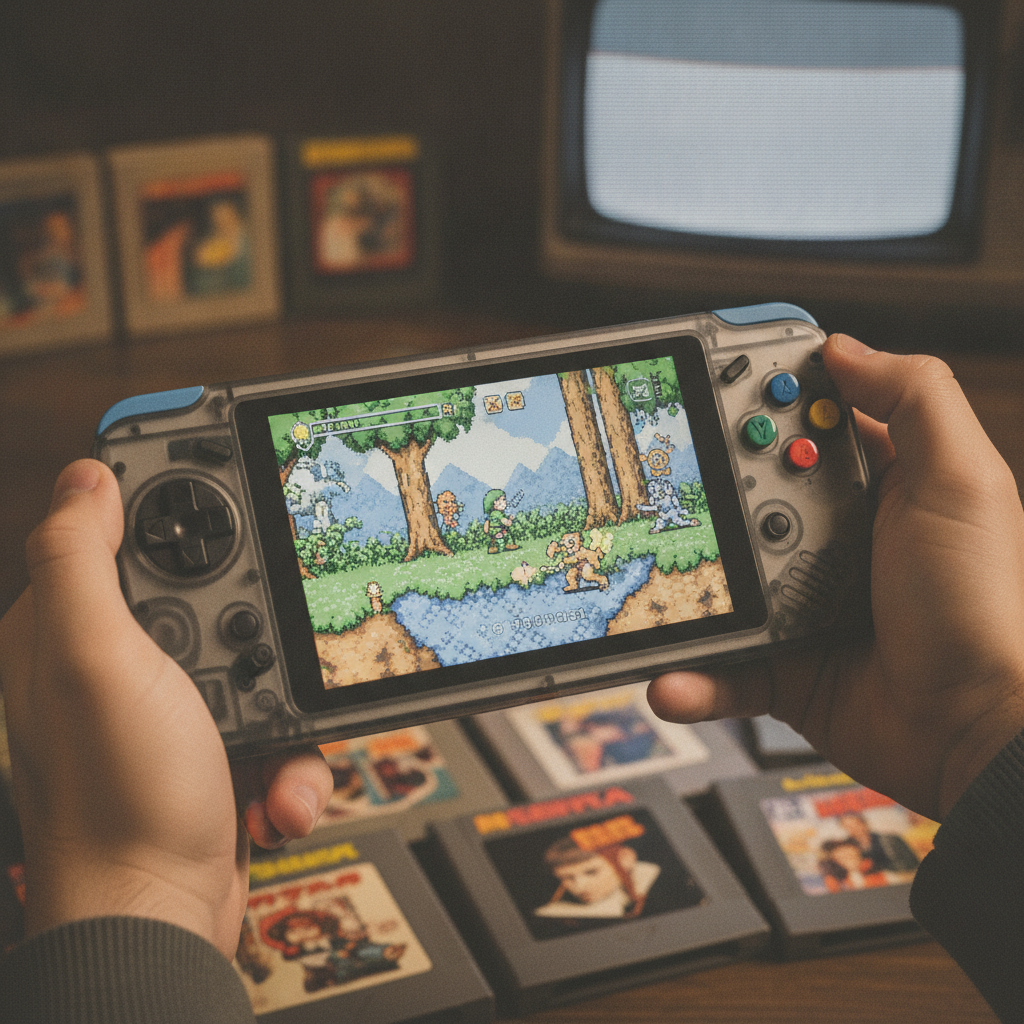
The world of portable gaming is in a constant state of flux, with new devices hitting the market at an astonishing pace, each promising a better, faster, or more versatile experience. Amidst this vibrant landscape, the announcement of the Anbernic RG55G1 sent ripples of anticipation through the retro handheld community. It’s been barely two weeks since the initial reveal, yet the internet has been abuzz with fervent speculation, particularly around one critical detail: the potential integration of a Qualcomm chip. For many enthusiasts, this wouldn’t just be another incremental upgrade; it would signify a monumental shift for Anbernic, potentially elevating their devices to new performance heights.
The “G1” in the naming scheme itself was enough to ignite this particular wildfire of conjecture. Historically, Anbernic has often opted for alternative chipsets, and while their devices have always offered robust performance within their segments, the allure of a Qualcomm Snapdragon processor is undeniable. Qualcomm chips are synonymous with powerful mobile performance, excellent driver support, and a broader compatibility with demanding emulators and modern Android games. If Anbernic were indeed making this leap, it would position the RG55G1 as a serious contender against other premium handhelds that have already embraced Qualcomm technology. The thought of Anbernic’s renowned build quality combined with Snapdragon-level power is, to put it mildly, tantalizing for anyone passionate about portable retro gaming.
This initial wave of excitement wasn’t without its early leaks and accidental reveals. Not long after the official announcement, a brief gameplay snippet or an inadvertent detail would surface, either confirming or further fueling the rumors. These glimpses, however fleeting, seemed to corroborate the whispers of impressive performance. Gamers and tech reviewers alike dissected every frame, scrutinizing the smoothness of emulated titles and the responsiveness of the interface. The consensus, based on these early peeks, suggested that the RG55G1 was indeed shaping up to be a powerhouse, capable of handling titles that previously pushed Anbernic’s previous generations to their limits, and perhaps even beyond.
What does this mean for the user experience? A more powerful chip translates directly into a smoother, more expansive gaming library. Imagine playing a wider array of demanding PlayStation 2 or GameCube titles with fewer hiccups, or even venturing into the early stages of Nintendo Switch emulation. Beyond pure emulation, a robust Android backbone opens doors to an ecosystem of native Android games, expanding the device’s utility far beyond its retro roots. For many, the dream is a single handheld capable of delivering both pristine classic gaming and a competent modern mobile experience. The RG55G1, with its potential Qualcomm heart, promises to inch closer to that ideal.
However, the journey from announcement to market reality is often fraught with challenges. Pricing, battery life, screen quality, and the overall software experience will all play crucial roles in determining the RG55G1’s ultimate success. Anbernic has a strong track record of delivering solid hardware, but optimizing software for a new, potentially more complex chipset can be a significant hurdle. The community will be keenly watching for detailed reviews that delve into these aspects, ensuring that the theoretical performance translates into real-world satisfaction.
The Anbernic RG55G1 is more than just another handheld; it represents a potential turning point for a company known for its consistent contributions to the retro gaming scene. By possibly embracing a Qualcomm platform, Anbernic signals an ambition to push boundaries and meet the evolving demands of its sophisticated user base. For fans of portable gaming, this device could very well be one of the most exciting releases of the year, promising not just solid performance, but a glimpse into the future direction of budget-friendly, high-performance handhelds. The anticipation is palpable, and the final unveiling of all its capabilities is eagerly awaited by enthusiasts worldwide.