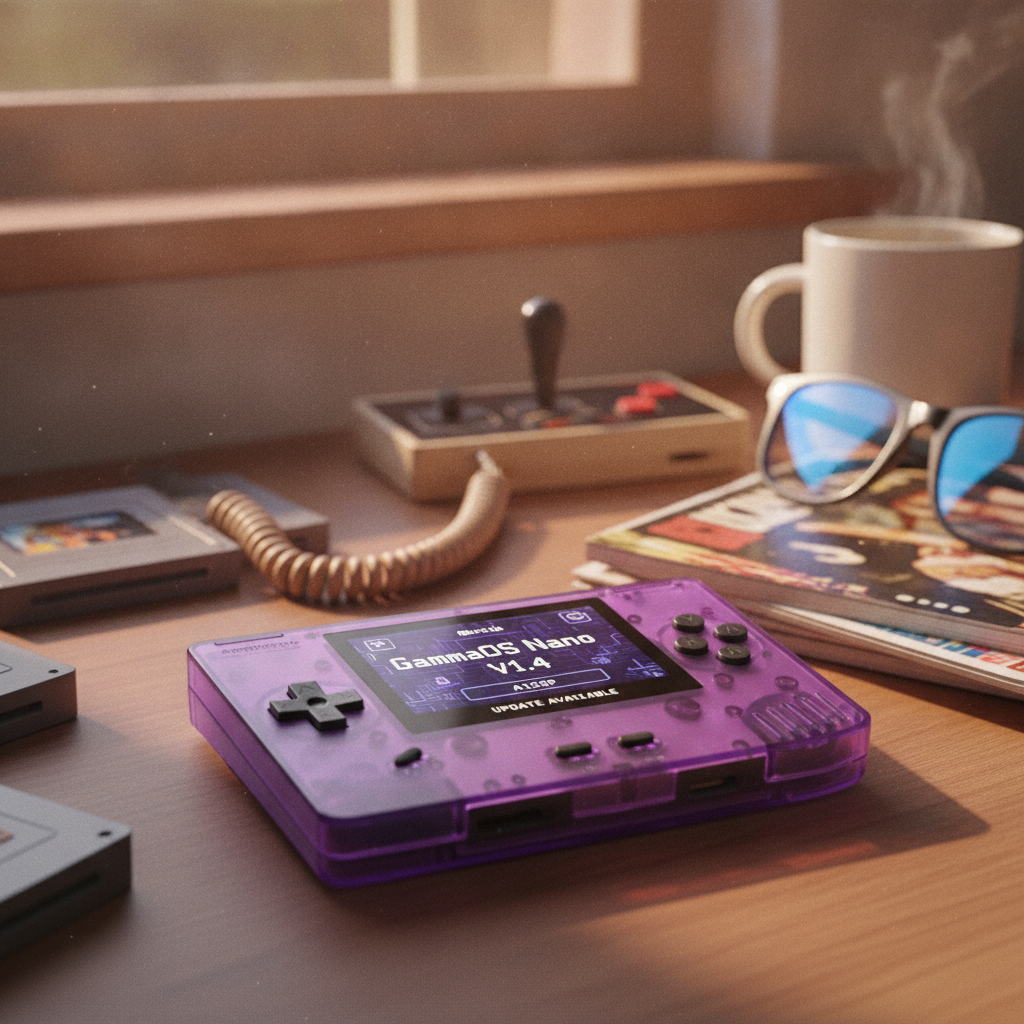
The world of retro gaming handhelds is a vibrant, ever-evolving landscape, constantly pushed forward by dedicated communities and brilliant developers. Among the luminaries in this space, one name has been creating significant waves recently: GammaOS. And if the latest developments are anything to go by, Gamma isn’t just “cooking”; they’re orchestrating a full culinary symphony for our beloved portable devices. The recent rollout of GammaOS Nano V1.4 has sent ripples of excitement through the community, particularly for owners of the A133P and other popular devices like the RG DS and RG Rotate, promising a transformation in how we experience our classic games on modern hardware.
For those unfamiliar, GammaOS is a custom firmware designed to unlock the true potential of various retro handhelds. While these devices often come with competent stock operating systems, custom firmwares like GammaOS elevate the experience significantly. They often bring improved performance, wider game compatibility, a more polished user interface, enhanced battery management, and access to advanced features that simply aren’t present in the factory-issued software. It’s akin to upgrading a standard car engine with a finely tuned, racing-grade powerhouse; the core hardware is capable, but custom software truly makes it sing.
The V1.4 release, which has landed with unprecedented speed across a range of devices, is a testament to the relentless pace of development by the Gamma team. What many initially anticipated would be a slow, steady drip of updates over weeks or even months has instead materialized as a rapid-fire deployment, ensuring a broad segment of the community benefits almost simultaneously. This aggressive update cycle is not just about pushing out new versions; it speaks volumes about the commitment to refining and perfecting the user experience. Each iteration brings stability fixes, performance tweaks, and often introduces new functionalities that make retro gaming on these portable powerhouses even more enjoyable.
Owners of the A133P, in particular, have a reason to cheer. While the specifics of the A133P’s architecture (likely referring to the Allwinner A133P chip) present unique challenges and opportunities, GammaOS Nano V1.4 appears to leverage its capabilities to the fullest. We’re talking about smoother emulation for more demanding systems, snappier menu navigation, and potentially improved battery life, allowing for extended gaming sessions on the go. Imagine diving into your favorite PlayStation 1 or N64 titles with a level of fluidity and responsiveness that rivals, or in some cases even surpasses, what was previously thought possible on these affordable devices. This isn’t just about playing games; it’s about preserving and enhancing the legacy of gaming history through superior software.
Beyond the raw technical improvements, GammaOS also focuses heavily on the user experience. A custom firmware isn’t merely a performance boost; it’s often a gateway to a more personalized and flexible gaming environment. This includes things like custom themes, easier game management, intuitive frontend interfaces, and often, better support for external controllers or peripherals. These quality-of-life improvements, while sometimes overlooked in discussions about raw power, are crucial for making a retro handheld truly feel like “yours.” The dedication to these finer details is what separates good custom firmware from truly great ones.
The sheer speed of these releases also highlights a fascinating aspect of the retro handheld scene: the incredible synergy between hardware manufacturers and independent software developers. While manufacturers provide the canvas, it’s often the community-driven software projects like GammaOS that paint the masterpieces, unlocking nuances and efficiencies that might otherwise remain dormant. This dynamic fosters a healthy ecosystem where innovation is constant, and user feedback directly influences development. It creates a sense of collective ownership and excitement that is hard to find in more closed-off commercial environments.
Looking ahead, the rapid succession of updates for GammaOS Nano V1.4 suggests that the development team is far from finished. If the past few days are any indication, we can expect continued refinement, expansion to even more devices, and perhaps entirely new features that will further push the boundaries of what these compact machines can achieve. This ongoing commitment ensures that our retro handhelds aren’t just stagnant pieces of hardware but living, evolving platforms ready to embrace the next wave of retro gaming innovation. The future, it seems, is bright and brimming with possibilities for the portable retro enthusiast, thanks to the tireless efforts of developers like Gamma. Get ready, because the kitchen is still hot, and Gamma is showing no signs of slowing down their incredible culinary journey.