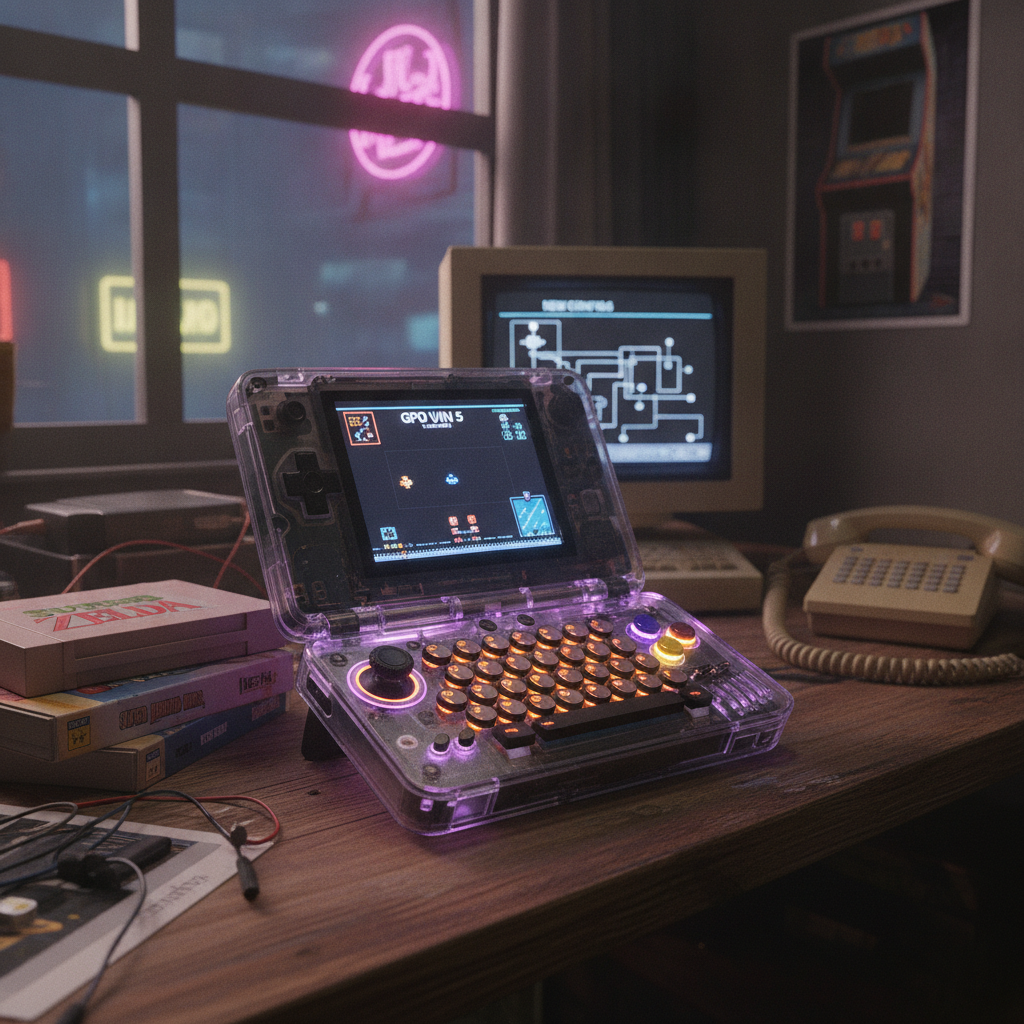
The world of portable gaming is in a constant state of flux, pushing boundaries we once thought impossible. For what feels like an eternity, but in reality, has been about a year, the GPD Win 5 has been a whispered legend among those who crave desktop-level performance in the palm of their hand. Now, it appears GPD, never one to rest on their laurels, is poised to inject new life into this already formidable device with an updated configuration. This isn’t just another iterative bump; it’s a testament to the relentless pursuit of power and portability that defines the modern handheld PC landscape.
Let’s cast our minds back to the initial buzz surrounding the Win 5. Imagine the concept: a robust x86-based handheld, packing what is arguably the market’s most potent APU, capable of delivering a gaming experience akin to a full-fledged desktop. It’s a marvel of engineering, defying the conventional understanding of what a handheld device should be. Traditionally, handhelds excel in convenience and portability, often at the cost of raw horsepower. The Win 5, however, flips this script entirely, aiming to offer the best of both worlds – desktop-grade gaming without being tethered to a desk.
The magic of devices like the Win 5 lies in their ability to bridge the gap between dedicated gaming laptops and more casual handhelds. They present a compelling proposition for those who demand uncompromising performance for AAA titles on the go, or even for creative professionals needing a powerful mobile workstation. The challenge for GPD has always been multifaceted: how do you dissipate the heat generated by such a powerful chip within a compact chassis? How do you ensure battery life doesn’t become a crippling Achilles’ heel? And critically, how do you maintain a comfortable ergonomic design when housing components typically found in larger systems?
While the specifics of this “new configuration” are still emerging, one can speculate on the likely enhancements. A common approach for such refreshes often involves a leap to the next generation of APUs, offering improved core counts, higher clock speeds, and more efficient integrated graphics. This could translate to noticeable gains in frame rates, allowing for higher graphical settings or smoother gameplay in demanding titles. Beyond the CPU/GPU, we might also see upgrades in RAM, perhaps moving to faster DDR5 modules or increasing the capacity to ensure future-proofing. Storage options could also see a boost, with larger and quicker NVMe SSDs becoming standard. Even subtle refinements to the cooling system, like a more efficient fan design or improved heat pipes, could yield significant performance benefits under sustained load.
The impact of such an update on the GPD Win 5 is clear: it solidifies its position as a top-tier contender in the burgeoning handheld PC market. For consumers, it means even more choice and even greater performance density in a portable form factor. It speaks to a future where the line between a handheld and a desktop continues to blur, offering unprecedented freedom for gamers and power users alike.
The journey of the GPD Win 5, from its initial conception to this latest iteration, is a fascinating case study in miniaturization and computational prowess. It’s a device that, by its very nature, challenges expectations and redefines what’s possible in portable computing. As GPD continues to refine and enhance its flagship handheld, it’s exciting to imagine the new benchmarks it will set and the new experiences it will unlock for users who refuse to compromise on performance, no matter where they are. This refreshed Win 5 isn’t just an update; it’s a statement about the future of gaming on the go.