The year 2025 was undeniably a landmark period for Mangmi, a company that consistently managed to capture the spotlight, for better or for worse, in the ever-evolving world of portable gaming. They kicked off that year with an announcement that sent ripples across the enthusiast community: the Mangmi Air X. Positioned as a Snapdragon-powered budget handheld, it promised a compelling blend of performance and affordability. However, as is often the case with ambitious tech launches, the Air X navigated a series of frustrating delays. These setbacks tested the patience of eager consumers and fueled speculation about the company’s execution capabilities. Yet, when the device finally landed in the hands of reviewers and early adopters, it quickly became apparent that Mangmi had indeed delivered something special. The Air X, despite its rocky road to market, emerged as an incredibly capable and well-received device, carving out a significant niche in the competitive handheld landscape. Its success cemented Mangmi’s reputation as a serious player, capable of producing high-quality hardware that resonated with its target audience.
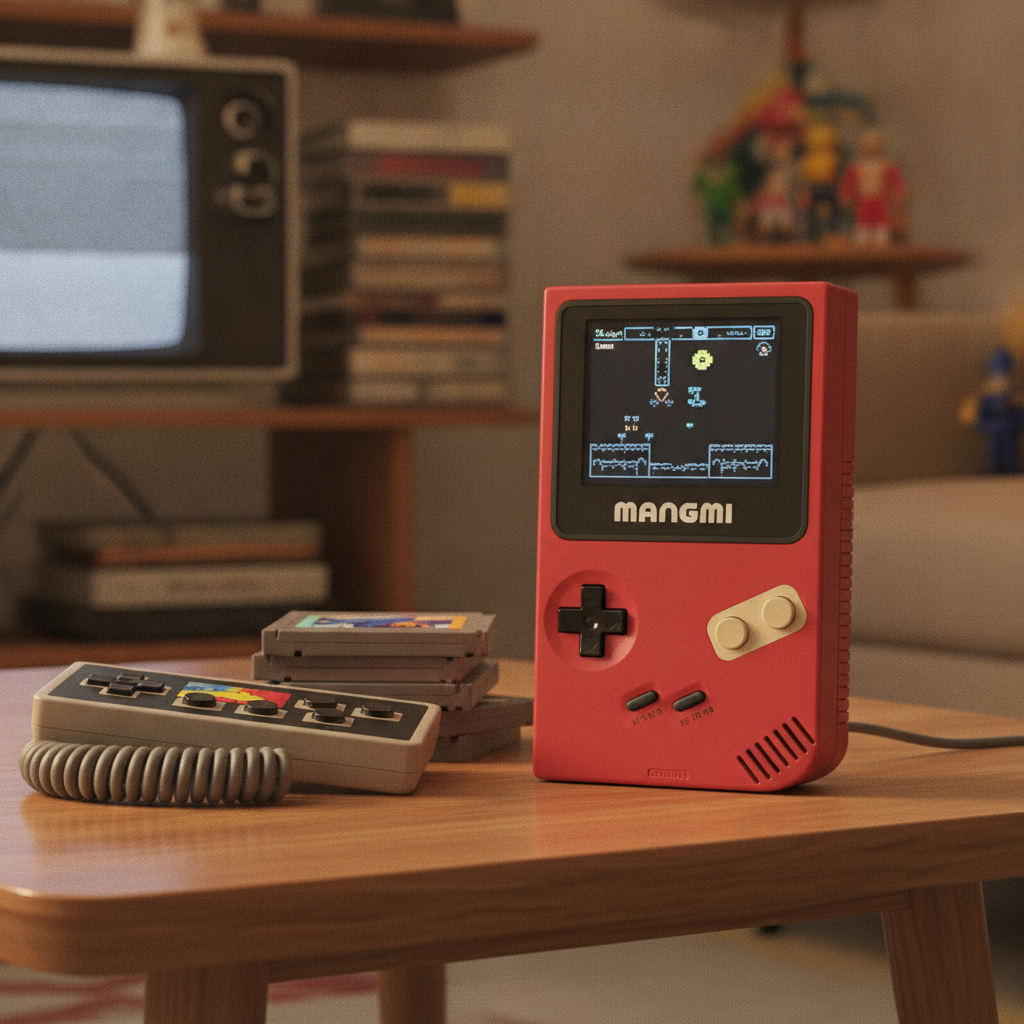
Now, as we move further into 2026, Mangmi appears to be doubling down on innovation, once again turning heads with the unveiling of a brand new vertical handheld. This strategic pivot signals a deliberate move to explore different form factors and potentially tap into a distinct segment of the portable gaming market. Vertical handhelds, with their classic Game Boy-esque ergonomics, often evoke a sense of nostalgia while offering a unique play experience, particularly for retro gaming enthusiasts or those who prefer a more compact, pocketable device. The design choice itself is a statement, hinting at a focus on portability and perhaps a different approach to control schemes and screen orientation compared to the more prevalent horizontal layouts we see today.
The introduction of a new vertical model naturally invites questions about its specifications, capabilities, and target demographic. Will this new device inherit the powerful Snapdragon architecture that made the Air X so appealing, or will Mangmi opt for a different chipset to optimize for cost or battery life in this new form factor? The balance between performance, price, and portability is always a delicate dance for handheld manufacturers. For a vertical device, screen quality and aspect ratio become crucial. Many vertical handhelds cater specifically to older console emulation, where a 4:3 or 3:2 aspect ratio can provide an authentic experience without excessive black bars. If Mangmi is indeed leaning into this niche, we can expect a thoughtful consideration of these display characteristics.
Furthermore, the controls on a vertical handheld are paramount. The placement of the D-pad, analog sticks (if present), and face buttons dictates much of the user experience. Will Mangmi innovate with haptic feedback, or perhaps introduce unique programmable buttons tailored for the vertical orientation? The original Game Boy’s simplicity was its strength; modern vertical handhelds aim to retain that simplicity while adding the versatility demanded by a diverse range of emulated systems. Mangmi’s track record with the Air X suggests they understand the importance of quality input mechanisms, so expectations will be high for their new vertical offering.
This latest announcement positions Mangmi at an interesting crossroads. Having proven their mettle with a successful horizontal device, they are now venturing into a segment that, while niche, is incredibly passionate. The move could be seen as an attempt to diversify their product portfolio, offering consumers a choice that aligns with their preferred gaming style. It also indicates a deeper understanding of the handheld market beyond just raw power – an acknowledgement that form factor and user experience are equally vital. Competing devices in the vertical space, often coming from smaller, specialized manufacturers, have shown there’s a hungry market for well-designed, ergonomic machines tailored for retro gaming. Mangmi, with its established supply chain and growing brand recognition, could disrupt this segment significantly.
The coming months will undoubtedly reveal more about Mangmi’s new vertical handheld. Details on its exact specifications, pricing, and release window will be eagerly awaited. What’s clear, however, is that Mangmi isn’t content to rest on the laurels of its past successes. Their bold decision to embrace the vertical form factor demonstrates a commitment to innovation and a willingness to explore new avenues in the ever-expanding universe of portable gaming. For fans of classic gaming and those seeking a truly pocketable powerhouse, Mangmi’s latest endeavor is certainly one to watch closely. It could very well be a game-changer, solidifying their position as not just a notable player, but a true innovator in the handheld space.