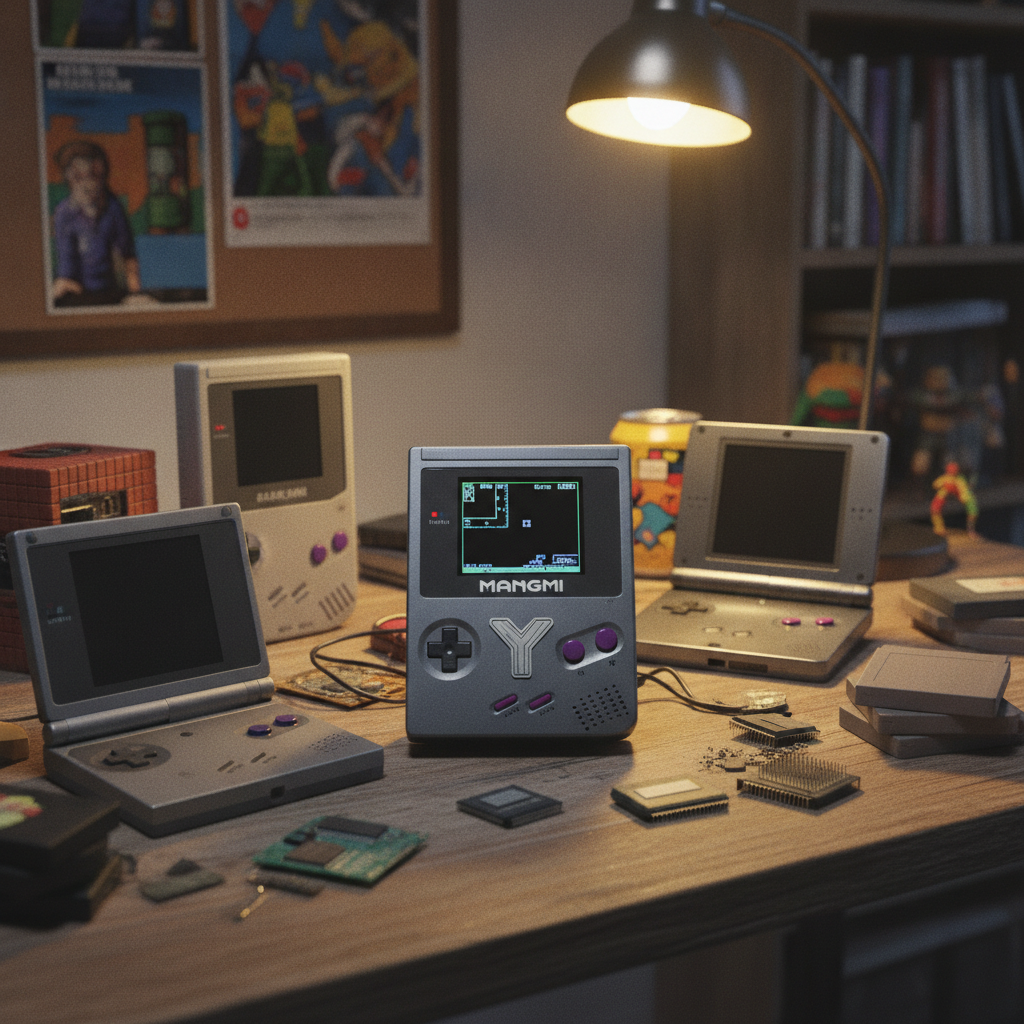
The anticipation around Mangmi’s latest foray into the competitive handheld gaming market has been building steadily since their initial teaser on July 10th. Gamers and tech aficionados alike were introduced to the silhouettes of the Mangmi Air Y and its more robust sibling, the Y Pro – devices that promised a sleek vertical form factor, intuitive controls, and what appeared to be generous displays. The air was thick with speculation, dreaming up possibilities for raw power and groundbreaking features. However, the subsequent reveal regarding the internal silicon has dampened much of that initial excitement, leaving many to wonder if Mangmi is playing it safe, or perhaps, simply falling behind.
The core of the recent announcement revolved around the Central Processing Units (CPUs) that will be powering the Y-lineup. And, to put it mildly, the news was less than revolutionary. The underlying sentiment across the community platforms and tech forums can be distilled into a single, somewhat deflated phrase: “nothing new.” For a market that thrives on incremental improvements and the constant push for more powerful, more efficient chips, this declaration from Mangmi feels like a missed opportunity to truly innovate and capture the imagination of a discerning audience.
What does “nothing new” truly signify in the context of modern handheld gaming? It implies that Mangmi is likely leveraging existing, perhaps even previous-generation, processor architectures. While this approach can certainly lead to cost efficiencies in manufacturing and potentially a more attractive retail price point, it also brings with it inherent limitations. Performance ceilings become a significant concern. Will these devices be capable of smoothly running the latest emulation targets, or even demanding native Android titles, without compromise? The fear is that rather than setting new benchmarks, the Air Y and Y Pro might merely keep pace with, or even lag behind, competitors who are consistently integrating cutting-edge mobile SoCs.
For Retpad readers, who appreciate both the nostalgia of retro gaming and the thrill of pushing boundaries, this news prompts critical questions. A powerful CPU is the heart of any modern handheld. It dictates everything from menu responsiveness to game loading times, and most crucially, the fidelity and frame rates of emulated classics or contemporary indies. If Mangmi’s chosen silicon isn’t a leap forward, what other features will they rely on to differentiate their devices? Will an exceptional display, superior build quality, or a meticulously optimized software experience be enough to compensate for a potentially underwhelming processing package?
The design cues revealed thus far—a vertical orientation, dual analog sticks, and a presumably large screen—are promising. These elements suggest a focus on ergonomic comfort and immersive visual experiences, which are undoubtedly crucial. However, even the most stunning display or comfortable grip can’t mask stuttering frame rates or inability to handle certain software. The market is already rich with options, from budget-friendly retro machines to high-end powerhouses. Mangmi needs to carve out a compelling niche, and relying on older tech makes that challenge considerably steeper.
Perhaps Mangmi has a strategic play we’re not yet privy to. It’s possible they’ve opted for a highly stable, well-understood platform to prioritize reliability and battery life, aiming for a different segment of the market that values consistency over raw power. Or, this could be a calculated move to keep production costs down, allowing them to hit a particularly aggressive price point. Without further details on the specific chip architecture or the broader vision for the Y-series, we are left to speculate.
As we await further revelations and, ultimately, hands-on reviews of the Mangmi Air Y and Y Pro, the community remains cautiously optimistic, yet undeniably watchful. The promise of new hardware is always exciting, but the foundation of that hardware—the CPU—has certainly tempered initial enthusiasm. Retpad will continue to monitor this evolving story, bringing you the latest as Mangmi reveals more about how these new devices plan to stand out in a crowded and fiercely competitive landscape. The true test will be in the performance, and whether “nothing new” can still deliver a compelling and enjoyable gaming experience.