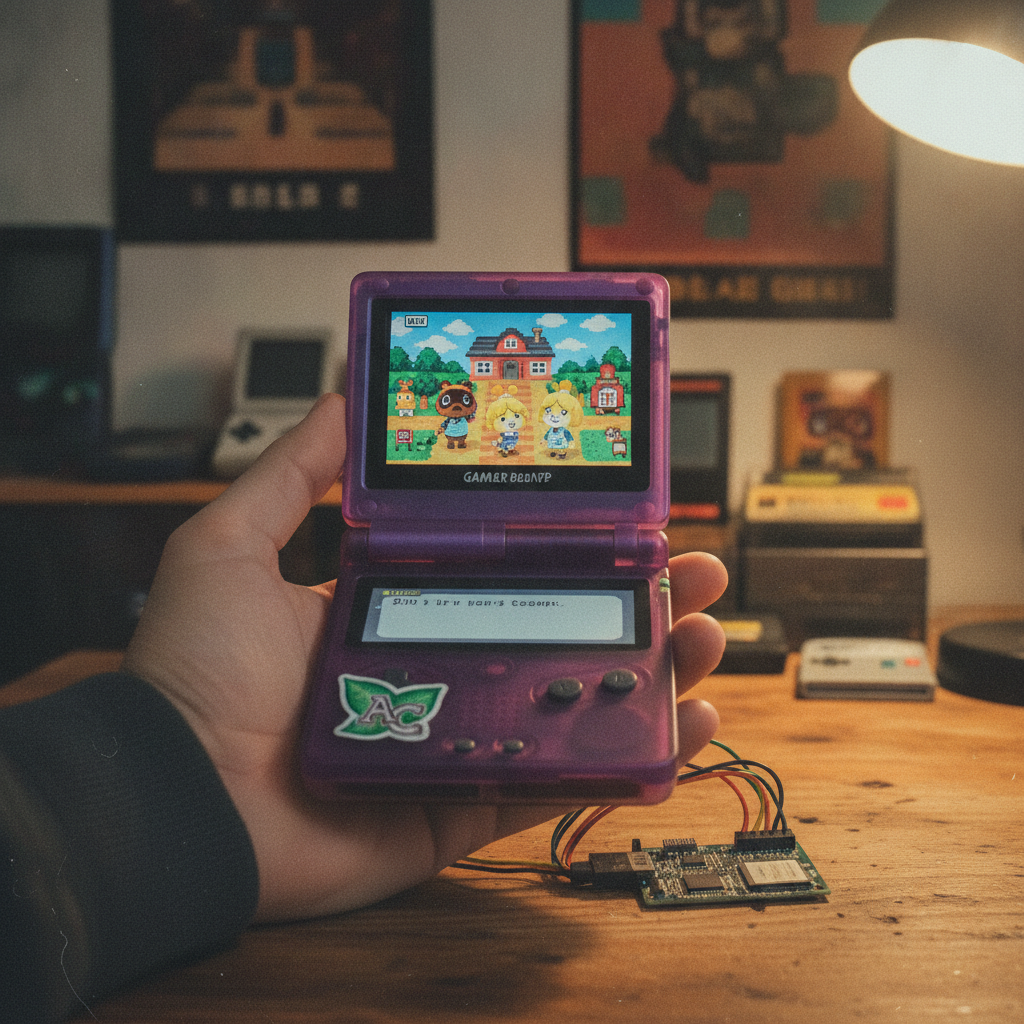
There’s a special kind of magic inherent in life simulation games. Whether it’s the meticulous city planning of SimCity, the intricate farming cycles of Stardew Valley, or the charming, serene existence offered by Animal Crossing, these titles often transcend mere entertainment to become a comforting digital sanctuary. For many, Nintendo’s Animal Crossing series, particularly its early iterations, holds a significant place in their gaming memories. The original GameCube version, with its unique blend of real-time events, quirky villagers, and endless customizable possibilities, created an idyllic escape that has been hard to replicate perfectly.
However, the passage of time often leaves beloved classics stranded on aging hardware. While emulators have offered a lifeline for many titles, true native ports or highly optimized experiences on modern, low-power portable devices remain a pipe dream for most. That is, until dedicated communities step in. We’re thrilled to highlight a monumental achievement in game preservation and accessibility: the successful decompilation of the original Animal Crossing, paving the way for it to run natively on a variety of ‘clamshell’ style handhelds and other portable devices that were never originally intended to host such a sprawling GameCube title.
Decompilation is a Herculean task, often misunderstood by those outside the technical circles. It involves taking compiled machine code – the raw instructions a computer understands – and meticulously reverse-engineering it back into human-readable source code. Imagine trying to reconstruct a complex building’s blueprints just by looking at the finished structure; it requires an incredible eye for detail, deep understanding of the original architecture, and countless hours of dedicated work. For Animal Crossing, this means that a dedicated team has essentially rebuilt the game from the ground up, not through emulation, but by recreating its very DNA. This isn’t just about making the game run; it’s about understanding its every function, every bug, and every design choice at a fundamental level.
The implications of this decompilation are vast and exciting for the retro gaming community and beyond. Firstly, it offers a pathway to game preservation unlike any other. By having access to the original source code, albeit reverse-engineered, developers can ensure that Animal Crossing remains playable and maintainable for future generations, free from the limitations or potential obsolescence of the original GameCube hardware. This isn’t just about keeping a game alive; it’s about safeguarding a piece of cultural history.
Secondly, and perhaps most immediately impactful for players, is the newfound portability. Imagine slipping a sleek, modern clamshell device – perhaps reminiscent of a bygone era’s handhelds but packed with contemporary power – out of your pocket and instantly diving into your personalized Animal Crossing town. No longer are you tethered to a television or restricted by the bulk of a GameCube and its peripherals. This project breathes new life into the idea of island life on the go, offering a seamless, optimized experience that bypasses the performance overheads often associated with emulation. Players can look forward to smooth frame rates, potentially enhanced visuals (if the community chooses to implement them), and a truly native feel on devices like specialized retro handhelds, bringing a desktop-level experience into the palm of your hand.
For fans of Retpad.com, this development resonates deeply with our ethos of celebrating classic games and exploring innovative ways to experience them. It highlights the power of community-driven projects and the enduring passion that keeps these virtual worlds alive. It’s a testament to what can be achieved when enthusiasts pool their knowledge and dedication, pushing the boundaries of what was once thought possible. This isn’t merely a technical feat; it’s a nostalgic journey reimagined, offering a chance for both seasoned veterans to revisit their beloved towns and for a new generation to discover the timeless charm of the original Animal Crossing in a format that suits modern lifestyles.
The decompilation of Animal Crossing is more than just code; it’s a bridge between gaming’s past and its future. It showcases the vital role that community efforts play in not only preserving our digital heritage but also in enhancing it, ensuring that the magic of an island paradise remains accessible, vibrant, and, crucially, wonderfully portable for years to come.