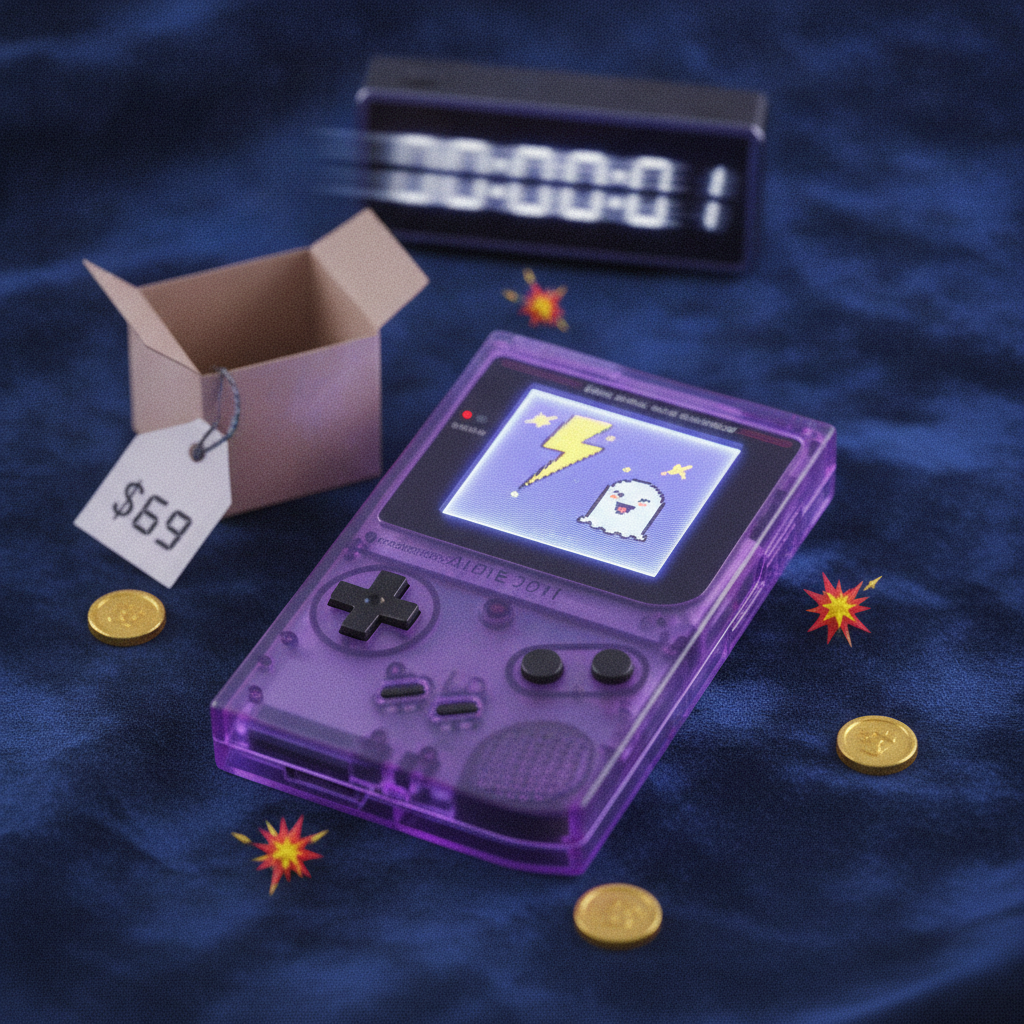
The world of retro handhelds is a vibrant, fast-paced arena where innovation meets nostalgia, and products often disappear from virtual shelves quicker than you can say “Game Boy.” Such was the case with FunnyPlaying’s much-anticipated FPGB MINI, a tiny tribute to the classic Game Boy that launched with a tempting $69 price tag. In what has become a familiar story for enthusiasts, the device sold out in a flash, leaving many hopeful gamers empty-handed and reinforcing the insatiable demand for these pocket-sized slices of history.
FunnyPlaying has carved out a niche for itself by offering high-quality mods and custom parts for beloved retro consoles, so the move to create their own mini-handheld was met with considerable excitement. The promise of a compact, affordable device capable of playing original Game Boy titles, perhaps even through modern enhancements, struck a chord with the community. The swift sell-out underscores not just the appeal of FunnyPlaying’s brand but also the enduring allure of the Game Boy platform itself, a console that defined a generation of portable gaming.
However, the rapid launch and subsequent scramble for units have also brought with them a few caveats that early adopters are now discovering. Reports from initial testers and community discussions suggest that not all popular flash cartridges are playing nicely with the FPGB MINI. For those unfamiliar, flash carts are essentially modern cartridges that can store hundreds, if not thousands, of game ROMs, allowing a single physical cartridge to house an entire library of titles. They are a cornerstone of modern retro gaming, offering convenience and preservation without requiring a stack of original cartridges.
The potential incompatibility with certain flash carts is a significant point of concern for many in the retro gaming community. Part of the appeal of devices like the FPGB MINI is the ability to easily access a vast library of games, often consolidated onto a single flash cart. If a player’s preferred flash cart — perhaps a tried-and-true model they use with other Game Boy hardware — doesn’t function as expected, it could significantly impact their experience and the overall value proposition of the device. This issue raises questions about the hardware architecture of the FPGB MINI, whether it’s a matter of specific chipsets not being recognized, or perhaps a firmware update could resolve these early teething problems.
The retro handheld market is incredibly competitive and driven by community feedback. While the initial sell-out is a clear win for FunnyPlaying, addressing these compatibility issues will be crucial for the long-term success and reputation of the FPGB MINI. Enthusiasts are often quick to share their findings, both positive and negative, and word of widespread flash cart problems could dampen future demand or lead to community-driven workarounds. Companies in this space thrive on good will and ensuring their products meet the expectations of a discerning audience.
For those who managed to snag an FPGB MINI, the advice is to keep an eye on community forums and official FunnyPlaying channels for updates and potential fixes. For those who missed out, this initial hurdle might offer a silver lining, suggesting it could be wise to wait for a second production run, allowing time for FunnyPlaying to iron out any software or hardware quirks. The race to deliver the perfect mini retro experience is ongoing, and while FunnyPlaying has certainly captured attention, the true test of their FPGB MINI will be its long-term compatibility and user satisfaction. The excitement of a quick sell-out is undeniably thrilling, but the lasting impression comes from a device that truly delivers on its promise of accessible, authentic retro gaming.