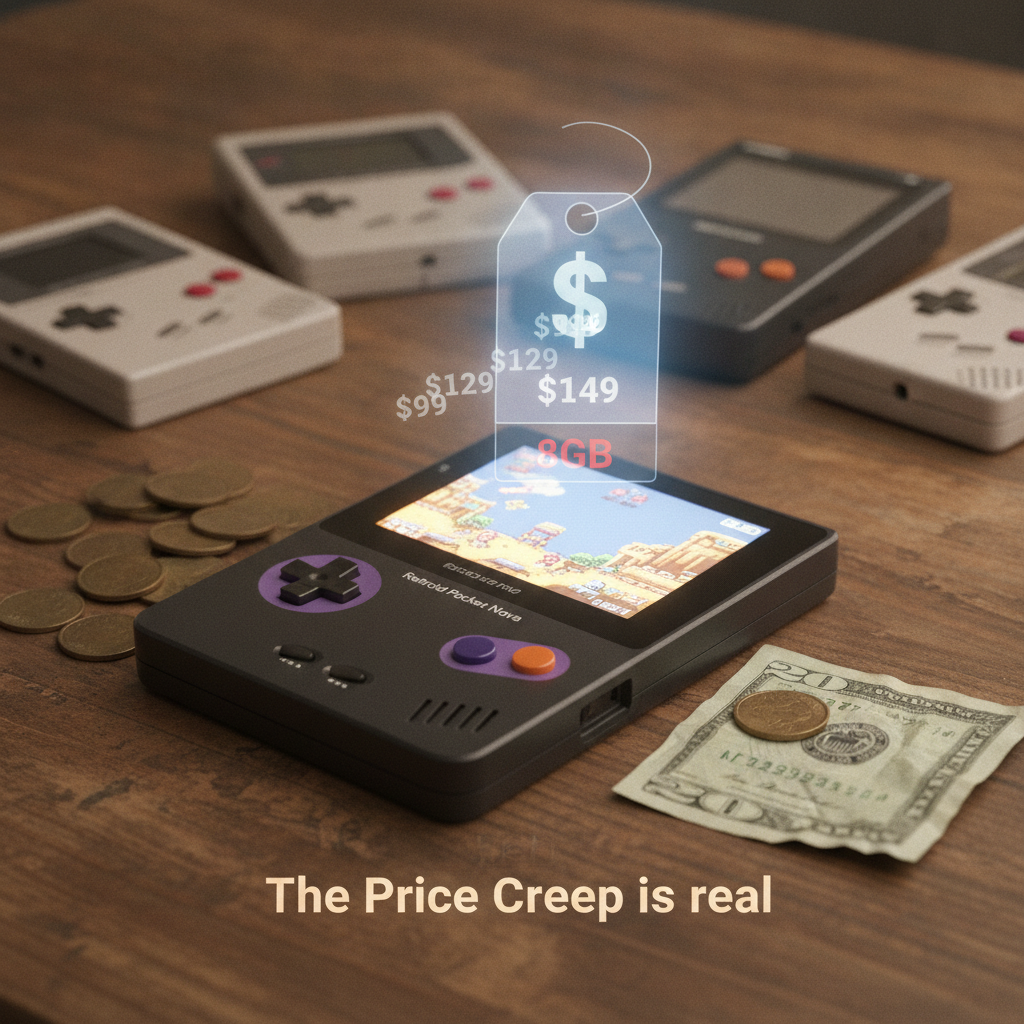
In the vibrant world of portable gaming, where innovation consistently pushes boundaries and new devices emerge with impressive regularity, there’s an underlying current that’s becoming increasingly noticeable: the steady upward climb of prices. It’s a phenomenon we affectionately, or perhaps not so affectionately, refer to as “price creep,” and it appears no manufacturer, no matter how beloved, is entirely immune. The latest example hitting our radar, and indeed, many of your wallets, is the Retroid Pocket Nova.
Specifically, the 8GB model of the much-anticipated Retroid Pocket Nova is slated to see a $10 increase in its retail price, effective August 6th. While ten dollars might seem a minor adjustment on its own, it’s part of a broader trend that warrants a deeper discussion. Why are we seeing these adjustments? And what does it signify for the future of our beloved handheld hobby?
The primary drivers behind these increasing costs are multifaceted, rooted deeply in the global supply chain and economic climate. At the forefront are the ever-fluctuating prices of core components. Qualcomm chipsets, which power a significant portion of modern handhelds, are not immune to market demands and material costs. When the cost of these crucial processors rises, it inevitably trickles down to the end product. Beyond the main System-on-a-Chip (SoC), memory components like RAM, often overlooked by the casual consumer, also play a substantial role. The price of high-quality RAM can fluctuate wildly based on global supply and demand, directly impacting manufacturing expenses.
Furthermore, the materials that make up the physical device – from the vibrant displays and durable plastics to the robust batteries and intricate circuit boards – all come with their own price tags that are subject to inflationary pressures and supply chain complexities. Manufacturing and assembly costs, shipping, and even the general economic inflation we’ve all felt across various sectors contribute to this upward trajectory. Building a sophisticated piece of portable technology today involves a global network of suppliers and intricate logistical operations, each point in which can add to the final expenditure.
For us, the consumers, this price creep translates into a more expensive entry point into the world of portable emulation and gaming. What might have been considered an affordable indulgence a few years ago could now require a more significant investment. This shift forces potential buyers to be more discerning, to weigh their options more carefully, and perhaps to save a little longer before pulling the trigger on a new device. It can also lead to a greater appreciation for older models or a renewed interest in the used market, as gamers seek to maintain their hobby within budget constraints.
From a manufacturer’s perspective, it’s a delicate balancing act. They need to absorb rising component and operational costs while remaining competitive in a rapidly evolving market. Pushing prices too high risks alienating their user base, while failing to adjust them adequately could jeopardize their profit margins and ability to innovate. It’s a constant tightrope walk between delivering cutting-edge technology and maintaining affordability. The Retroid team, like others, is likely navigating these very challenges, making difficult decisions to ensure the long-term viability of their product lines.
The “price creep” itself is insidious because it often manifests as small, incremental increases rather than dramatic overnight surges. These smaller bumps might not trigger immediate alarm bells, but over time, they accumulate, gradually shifting the baseline cost of these devices higher. It’s a testament to the ongoing economic pressures affecting the entire tech industry, not just a symptom unique to handhelds.
So, what does the future hold for handheld gaming enthusiasts? We can likely expect this trend to continue. As technology advances, components become more sophisticated, and the desire for higher performance and richer features persists, the cost of bringing these innovations to market will naturally increase. It underscores the importance of truly evaluating what you need from a device versus what’s simply new.
For those looking to dive into the handheld world or upgrade their current setup, our advice remains consistent: do your research, keep an eye on market trends, and consider if pre-ordering might save you a few dollars before announced price hikes take effect. While it’s frustrating to see our beloved gadgets become more expensive, understanding the underlying economic forces at play can help us appreciate the complexities involved and make more informed decisions as we continue to explore the thrilling landscape of portable gaming. The Retroid Pocket Nova remains a fantastic device, but its recent price adjustment is a stark reminder that even in our pockets, the rising tide of costs is very real.